Want to sell your property?
Then get started with a free, in-person valuation for your home.
Property Valuation
"*" indicates required fields





Historic architecture is everywhere you turn in Horsham, South East, from the medieval Causeway and half-timber gables to Victorian brick terraces, and the 20th Century’s interwar semis.
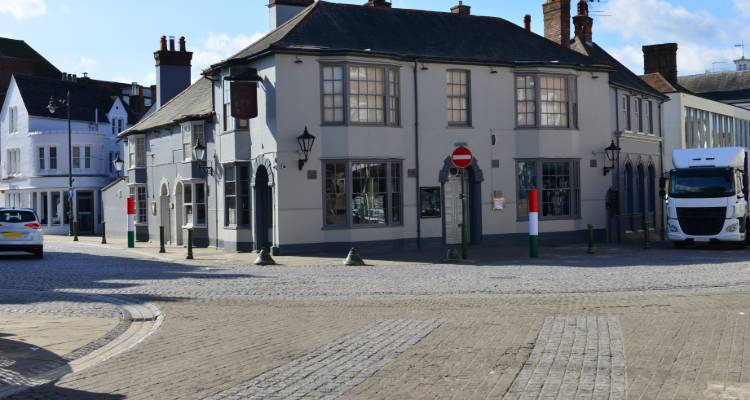
On the edge of town, though, whole new neighbourhoods are taking shape and adding to buyers’ options. Understanding what’s out there, and what comes with each building type, could help you get the most out of your property search.
One of the most distinctive features of Horsham’s older buildings is the roof. Horsham stone slates are cut from the West Sussex sandstone quarried from the local Weald, and have been used as a roofing material here since the Bronze Age. These slabs are heavy, irregular in shape, and laid in diminishing courses from eaves to ridge. The result is a thick, textured roof that weathers to a pale grey-green and is distinctive to this part of South East England.
You’ll see Horsham stone on the Parish Church, farm buildings and barns, as well as older cottages. Regular quarrying stopped in the 1930s, but can still be sourced for repairs and restoration. If you’re buying a listed building or a property in a conservation area with a Horsham stone roof, budget carefully as the material is not cheap and specialist contractors are required.
Leading south from the Grade I listed parish church of St Mary’s Horsham, The Causeway is home to many of Horsham’s oldest residential properties. The church itself dates from the 13th Century, while the historic homes surrounding it are mainly early 17th Century cottages with timber-framed construction, or detached Georgian houses.
Beyond The Causeway, the town centre and its immediate surroundings include a wide range of historic building types:
Horsham District contains around 1,800 listed buildings and 38 conservation areas (Horsham District Council). That’s an unusually high concentration for a market town of this size, and those charming period features are so appealing to many buyers.
But there is a practical side, as works that would be permitted development elsewhere may need planning consent here. Any alterations to a listed building require listed building consent from the council, and you must be extremely careful about the materials and methods used. Restrictions can apply to everything from extensions and outbuildings, to window replacement and external painting.
Much of the housing within walking distance of Horsham town centre dates from the Victorian and Edwardian periods. The arrival of the railway in 1848 opened the town to commuters, and new homes were much in demand. These solid brick properties tend to offer generous room proportions and good ceiling heights, as well as charming period features such as bay windows, original fireplaces, and decorative tiled hallways.
Period homes do come with practical considerations alongside the aesthetic appeal, of course. Original sash windows, solid brick walls without a cavity, and older drainage systems all have maintenance implications. A full structural survey is strongly advisable on any pre-1920 property.
Horsham expanded significantly between the wars, and the semis and detached houses built during the 1930s now make up a fair amount of the local mid-market property options. These properties often combine painted render or pebbledash with tile-hung gables and leaded light windows. They tend to have larger plots than Victorian terraces, with rear gardens long enough to suit families, and garages or side access that Victorian streets rarely offer.
Post-war housing built from the late 1940s through the 1970s understandably follows the construction trends of their decades. This can lead to quite a bit of variation, so buyers should look for a surveyor who knows the period. Some estates from this period are laid out with decent green space, others have dated construction details like flat-roof extensions, non-standard construction types, or asbestos-containing materials in their older outbuildings or textured coatings.
The most significant addition to Horsham’s housing stock in a generation is the mixed-use development, Mowbray Village in North Horsham. Set to deliver 2,750 new homes, starting with 596 homes delivered by Cala Homes, the concept is a built-in community with working space, new shops and woodland. Mowbray Village’s school, Bohunt Horsham, has already opened to pupils, and the 71 bus service is up and running to take residents into Horsham proper. Current phases include a range of two-bedroom apartments and two, three, and four-bedroom houses, with contemporary architectural design and well-proportioned interiors.
Elsewhere, smaller new-build schemes are active across the district:
New builds can offer certain advantages for buyers, such as ten-year structural warranties, lower running costs (particularly in homes with heat pumps and solar panels), and no upward chain. There is sometimes a trade-off, as new-build properties can take time to appreciate in value, and buyers should check carefully what is and isn’t included in the purchase price. It’s particularly important to get a solid overview on larger developments where landscaping and infrastructure may still be under construction at completion.
Water neutrality regulations in West Sussex, which had been restricting new development to preserve protected habitats, were lifted in November 2025. This could open the door to further new build developments in future.
Horsham has the most expensive detached, semi-detached, and terraced houses in West Sussex. The median price across all property types is £442,000 approx. according to ONS data, but that can hide the vast difference between any two examples. For instance, a two-bedroom Victorian terrace in the town centre and a four-bedroom detached house in a village to the south could command very different price points. Buyers will also find that the market can shift according to property type. In the year to July 2026, average prices for semi-detached properties rose by 2%, while flats saw a modest fall of 2% – so it’s worth talking to a local estate agent for an up-to-date impression.
Ongoing costs are another thing to factor into your budget calculations. In general, period properties with Horsham stone roofs or listed status will tend to carry higher maintenance costs and planning constraints than a standard Victorian terrace. New builds offer predictability and energy efficiency but come with their own considerations when it comes to their valuation and completion risk.
Given how much of Horsham’s housing stock sits within or near a protected area, it’s worth knowing the main implications before you start viewing:
None of this should put buyers off period property in Horsham, however. It’s simply best to go in with clear knowledge of the constraints. Having a solicitor who is familiar with listed building conveyancing, can make the process considerably smoother.
If you’re searching for a property in Horsham and want to understand which neighbourhoods and property types suit your budget and priorities, contact us. The team at HomedIn will be happy to help you navigate the Horsham property market with confidence. Register with us or browse what’s currently available to find your next home.
Horsham stone is a local West Sussex sandstone that has historically been used as a roofing material, and is known for its thick, irregular slabs. Properties with Horsham stone roofs are often listed or in conservation areas, which means repairs must use appropriate materials and specialist contractors. As such, it does tend to carry higher costs than standard roofing work.
Yes, any works that affect the character of a listed building, inside or out, require listed building consent from Horsham District Council. This is in addition to any standard planning permission that may apply, and covers everything from replacing windows to internal structural changes.
Yes. The largest development is Mowbray Village in North Horsham, which will eventually deliver 2,750 new homes as part of a new community. But smaller schemes like Barns Green and Lower Beeding, also offer a range of house sizes and specifications for buyers to choose from.
Horsham’s housing stock ranges from medieval and Tudor-era properties in the town centre to Victorian terraces, 1930s semis, post-war estates, and then contemporary new builds on the town’s outskirts. The rural surroundings offer barn conversions and village properties with a variety of architectural styles.
It can be, Horsham has some of the highest average prices for detached, semi-detached, and terraced houses in West Sussex. The median price across all property types is around £442,000 (HM Land Registry), though in reality, prices vary significantly according to the property type and location.
Then get started with a free, in-person valuation for your home.
"*" indicates required fields
Get in touch, and we will be more than happy to help you.
"*" indicates required fields

Is Horsham the Smartest Move You Can Make Out of London? Close enough to commute, surrounded by countryside, and priced well below compa...

Sussex property supply – or at least, the UK average – currently might be sitting at 10% more than in any time